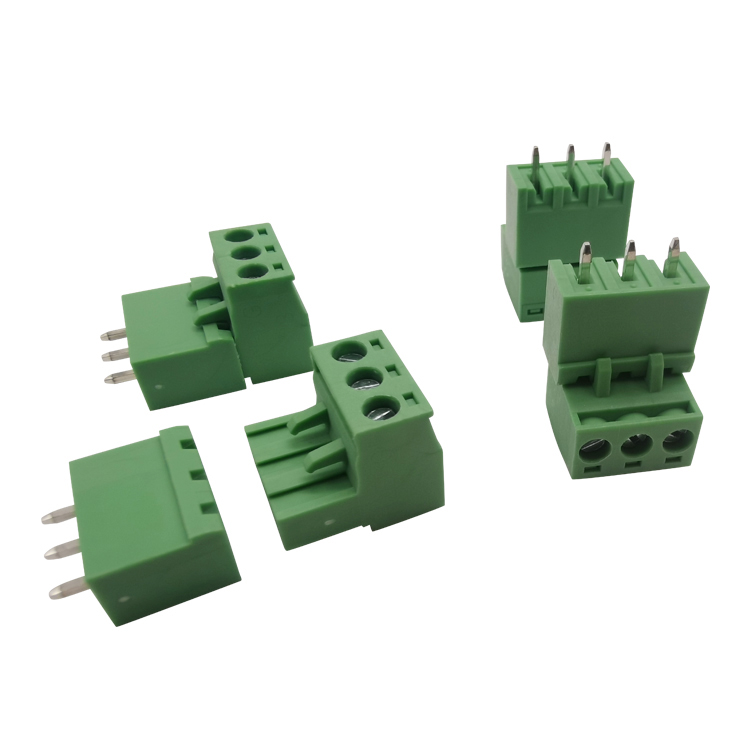
Verwendung von Klemmenblockist ein entscheidender Schritt zur Verbesserung der elektrischen Leistung und umfasst Aspekte wie Verbindungszuverlässigkeit, Signalintegrität und Energieübertragungseffizienz. Im Folgenden finden Sie eine systematische Anleitung zur Auswahl und Anwendung: I. Kernindikatoren für die elektrische Leistungsfähigkeit klar definierenKontaktwiderstand: Ein niedriger und stabiler Kontaktwiderstand reduziert die Wärmeentwicklung und den Energieverlust.Strombelastbarkeit: Die Anschlüsse müssen dem Nennstrom (unter Berücksichtigung der momentanen Spitzenwerte) standhalten.Spannungsabfall und Temperaturanstieg: Durch die hervorragende Konstruktion werden Spannungsverluste und Wärmeansammlungen minimiert.Isolations- und Durchschlagfestigkeit: Verhindert Leckströme und Durchschläge (insbesondere in Hochspannungsumgebungen).Signalintegrität: Hochfrequente Signale erfordern Impedanzanpassung und Abschirmung, um Störungen zu vermeiden. Mechanische Stabilität: Die Beständigkeit gegen Vibrationen und Lockerung gewährleistet einen zuverlässigen Kontakt über lange Zeit.II. Wichtigste Auswahlkriterien für Terminals1. MaterialauswahlLeitermaterial:Hohe Leitfähigkeit: Sauerstofffreies Kupfer und Kupferlegierungen (wie Messing und Phosphorbronze) sind die gängigsten Optionen.Umgebungen mit hohem Stromfluss/hoher Temperatur: Erwägen Sie eine Silberplattierung oder die Verwendung von Aluminium (für Leichtbauanwendungen).Isoliermaterial:Universell einsetzbar: PVC, Nylon (kostengünstig).Hochtemperaturbeständig/flammhemmend: PTFE (Teflon), PEI, PPS.Plattierungsbehandlung:Antioxidation/Verbesserte Leitfähigkeit: Silberplattierung (optimale Leitfähigkeit), Goldplattierung (Korrosionsbeständigkeit, geeignet für hohe Frequenzen), Zinnplattierung (kostengünstig, aber Vorsicht vor „Zinnwhiskern“).Anpassungsfähigkeit an die Umweltbedingungen: In Umgebungen mit Salzsprühnebel ist eine dicke Beschichtung oder eine Gold/Nickel-Verbundbeschichtung erforderlich. 2. TragwerksplanungCrimpen vs. Löten:Crimp-Anschlüsse: Erfordert Spezialwerkzeug, bietet hohe Konsistenz, gute Vibrationsfestigkeit und eignet sich für in Serie gefertigte Kabelbäume.Lötanschlüsse: Manuelles Löten birgt die Gefahr kalter Lötstellen; Wellenlöten/Reflow-Löten wird empfohlen.Gestaltung der Kontaktfläche:Drahtfederkonstruktion (Mehrfachkontakt): Redundanter Kontakt, ausgezeichnete Vibrationsfestigkeit.Doppelhelixfederkonstruktion: Hohe Haltekraft, geeignet für Umgebungen mit starken Vibrationen (z. B. in der Luft- und Raumfahrt).Verriegelungsmechanismus: Schnappverschlüsse und Gewindesicherungen (z. B. MIL-DTL-38999-Steckverbinder in Militärqualität) verhindern ein Lösen. 3. Passend zum KabelQuerschnittsflächenanpassung: Die Anschlussspezifikationen müssen exakt dem Drahtquerschnitt (z. B. AWG-Standard) entsprechen.Qualität der Verpressung: Verwenden Sie professionelle Verpresswerkzeuge, um ein Überverpressen (Metallbruch) oder ein Unterverpressen (unzureichende Zugfestigkeit) zu vermeiden. Isolationsunterstützung: Klemmen mit Isolierhülsen können Spannungsrisse verhindern.
Wenn Sie an unseren Produkten interessiert sind und weitere Einzelheiten erfahren möchten, hinterlassen Sie bitte hier eine Nachricht. Wir werden Ihnen so schnell wie möglich antworten.
 Deutsch
 English
 Deutsch
 Español
 عربي
عربي हिंदी
हिंदी

 Kontaktiere uns



 IPv6 NETZWERK UNTERSTÜTZT